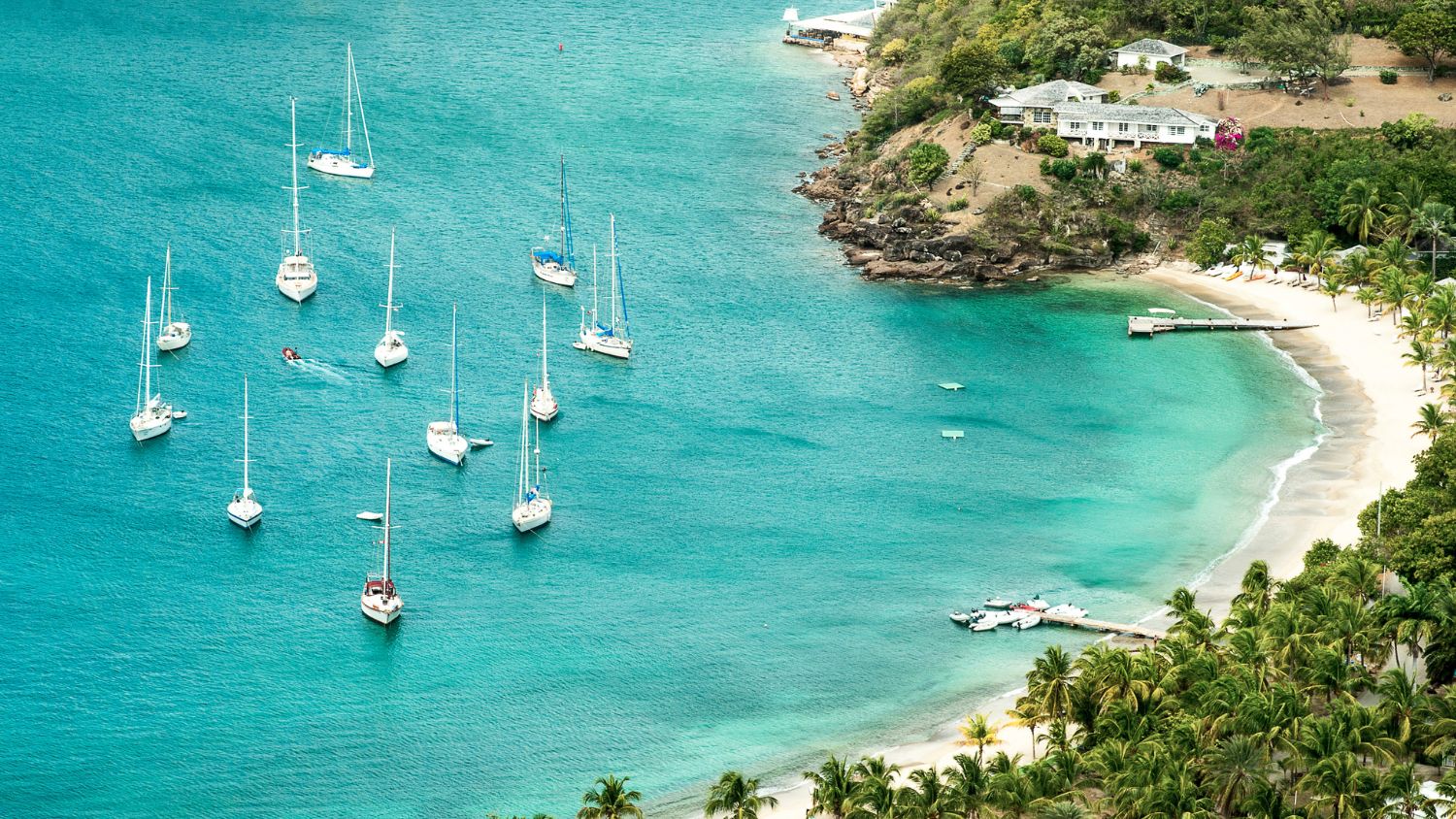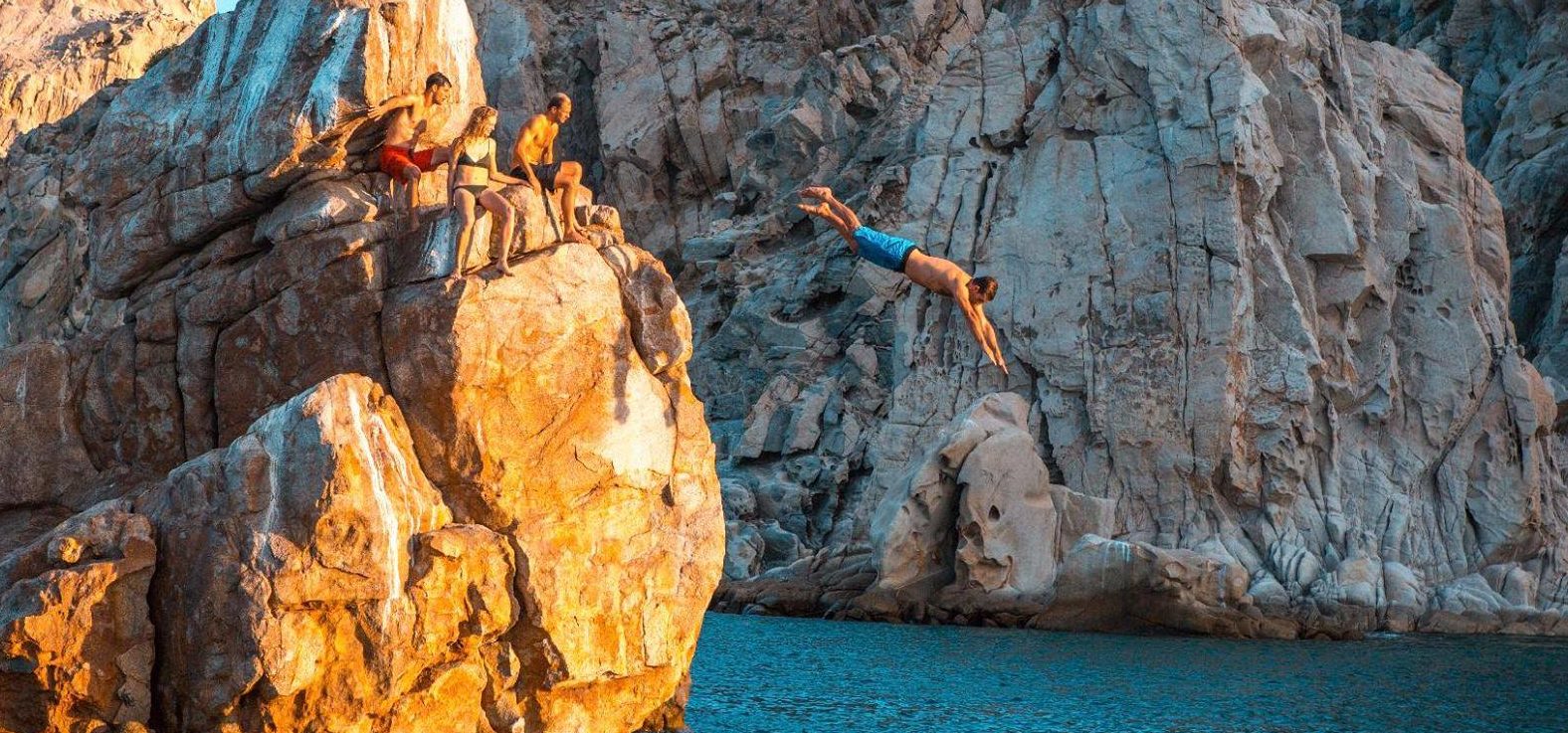




After a quick post-sunset dip in the pool at Langley Resort Fort Royal, I wrap up with a towel still warm from the dryer. This truly is the life.
When your Caribbean island destination is geographically shaped like a butterfly, relaxation feels all but assured. Such is the case with Guadeloupe, a French archipelago halfway up the outer arc of the Lesser Antilles chain. And happily, whichever “wing” of the butterfly you happen to be on – beach-centric Grande-Terre or volcanic Basse-Terre – a sense of wellbeing seems to float along the sea air. It’s just the restorative yet invigorating holiday you’ve been looking for.
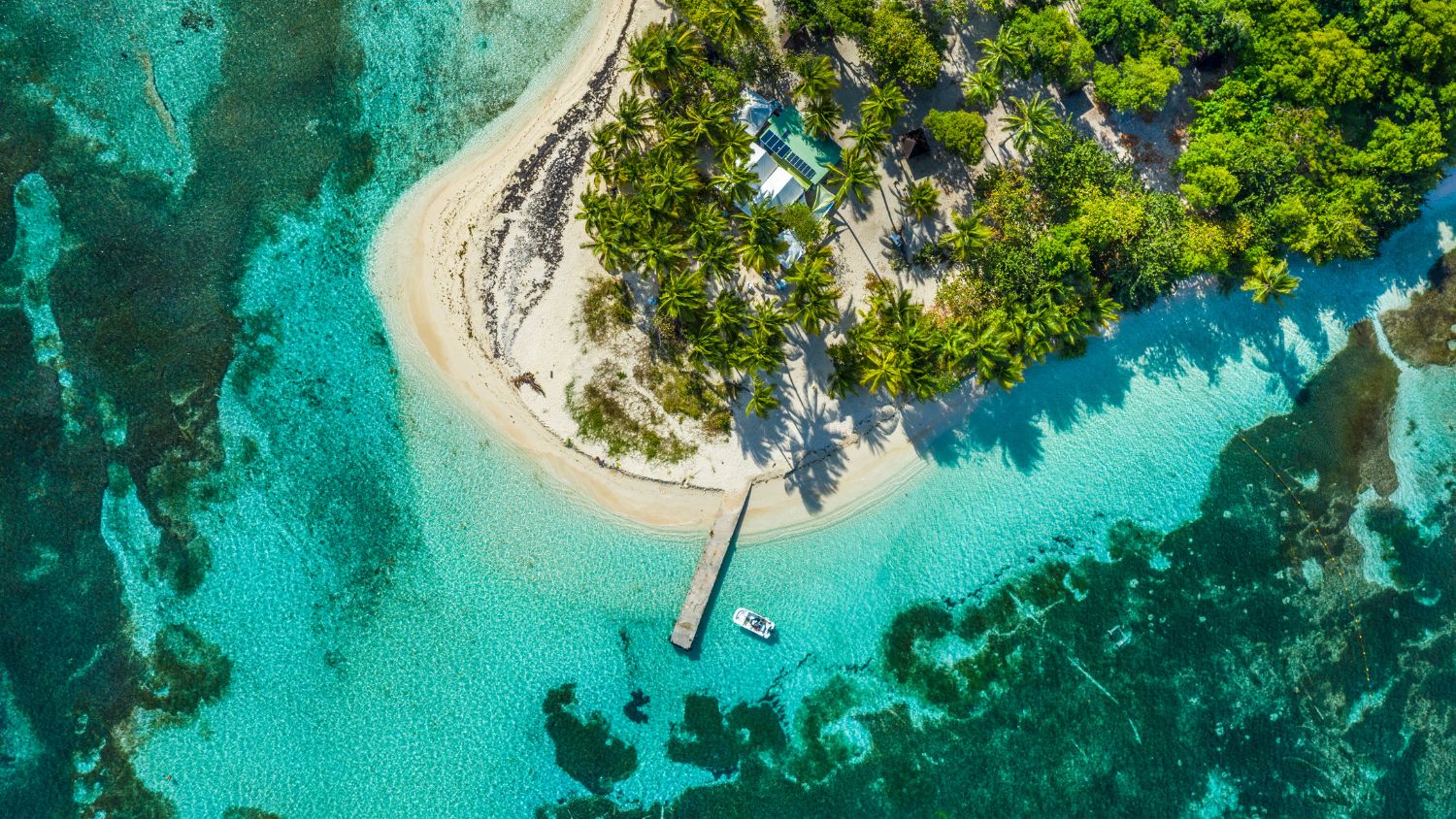
Îlet du Gosier: An idyllic islet sanctuary lies just off the coast of Grande-Terre, accessible by a short boat ride for a day of secluded swimming and snorkelling.
A series of six inhabited islands and several smaller islets and outcroppings, Guadeloupe presents an excellent opportunity to become immersed in nature, indulging your passion for wellness-based adventure and exhilaration or simply contemplating the world around you from your spot on the beach. As well, a laid-back atmosphere and attitude permeate my entire trip.





“We like to say our visitors are ‘low-key with both feet in the sand,’” says Langley Resort’s general manager Léon Raaijmaakers, whose guests come from all over Europe. Throughout the course of my stay, I hear German, Swedish, Flemish and French, of course. “They’re very active, adventurers in every sense, not just hard-core hikers, but those who want to relax and explore – and eat! We’re blessed with excellent local grouper, tuna and marlin.”
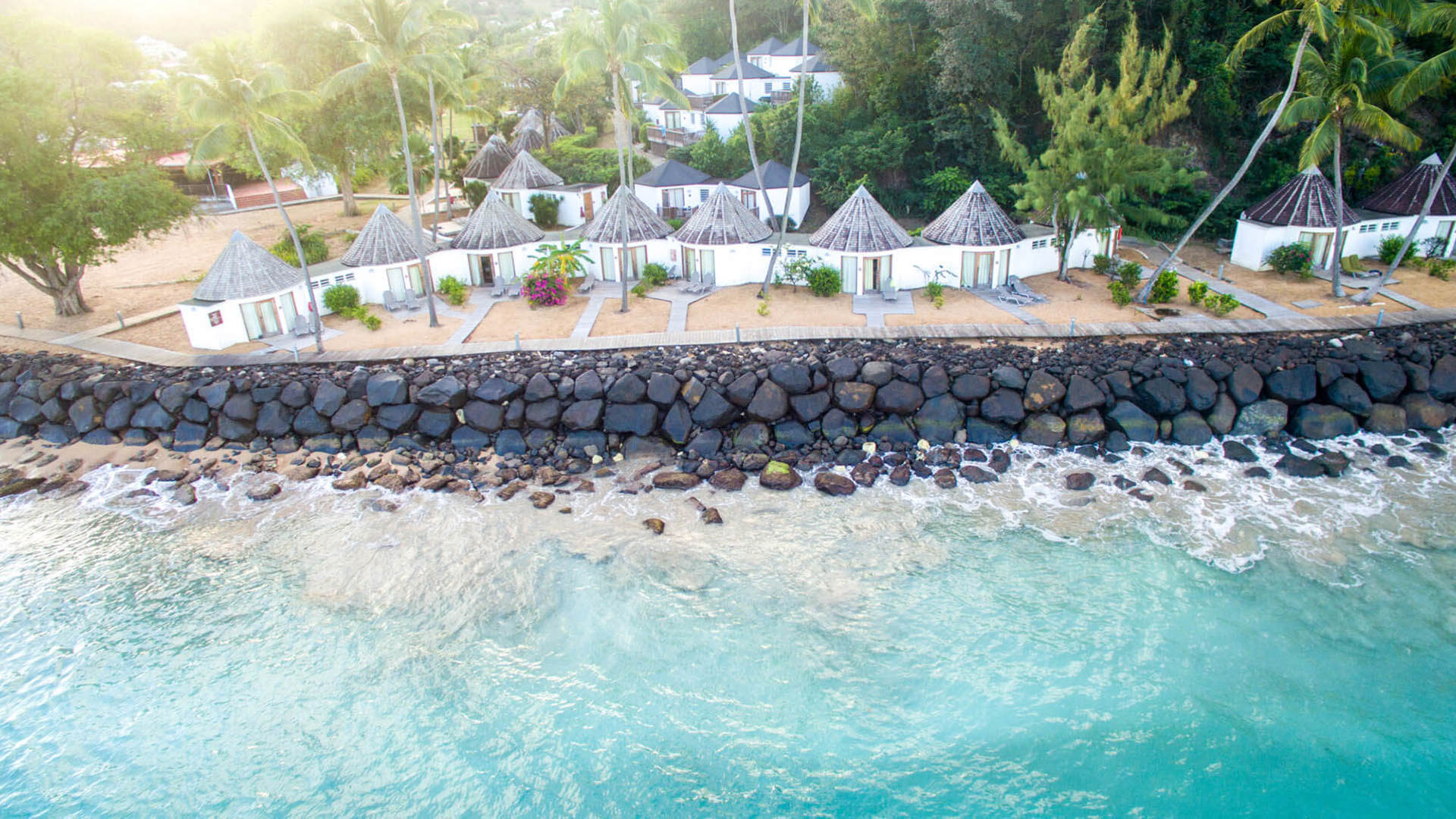
Langley Resort Fort Royal Bungalows
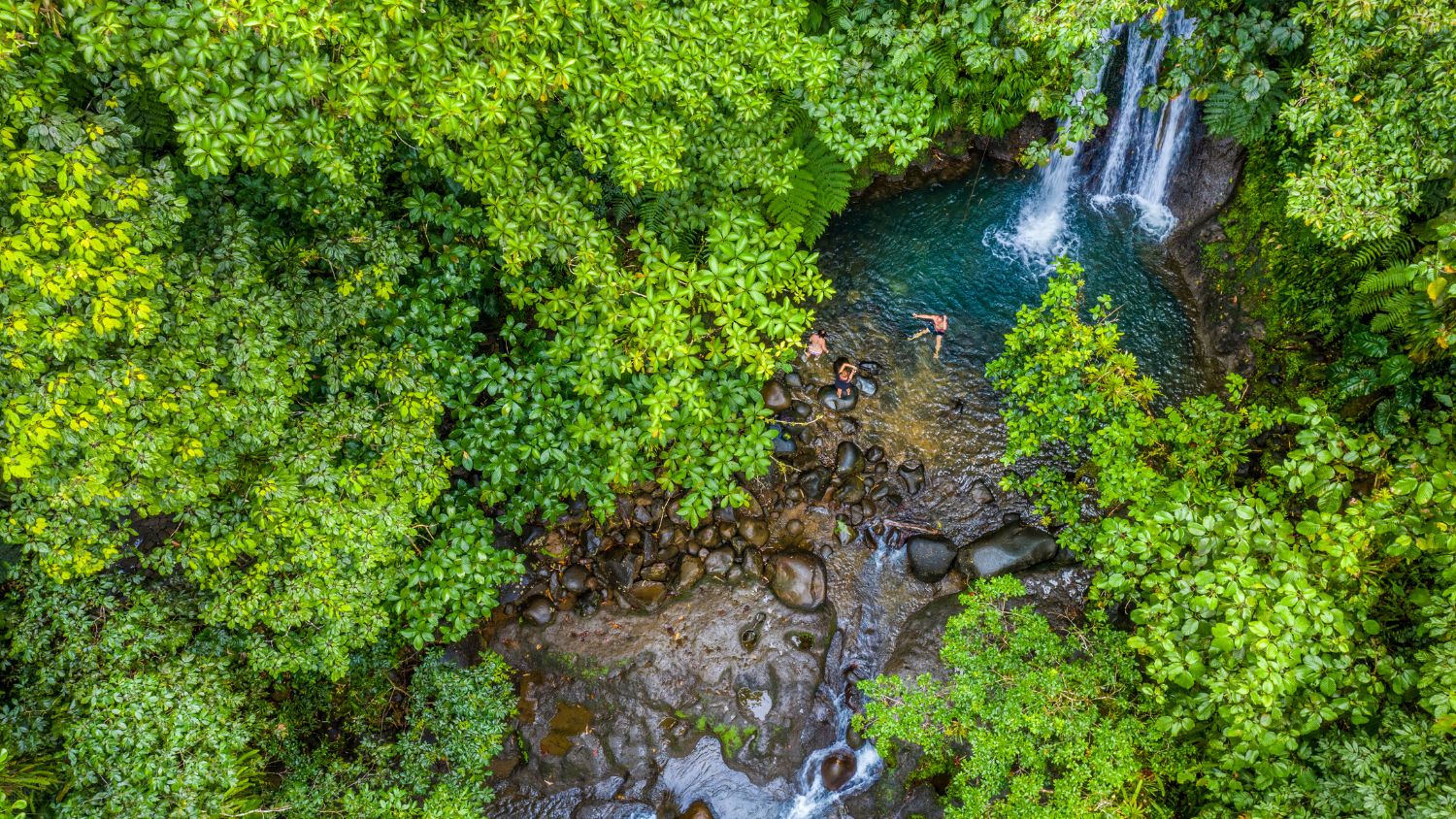
Basse-Terre is dominated by La Soufrière volcano and serves up nature in spades. We’re kept busy exploring parts of Parc National de la Guadeloupe, its rainforest a UNESCO Biosphere Reserve. Misty hiking trails reward us with stunning waterfalls, panoramic views, white gum trees and centuries-old mahogany trees.

Basse-Terre’s skyline is defined by La Soufrière, a volcano that dominates the island’s rainforest-covered peaks.
More flora awaits at the Botanical Garden of Deshaies, where the reasons behind the island’s variety of tropical splendour are revealed. And with a boat tour aboard the aptly named Idile, we sift through the mangroves of the Grand Cul-de-Sac Marin nature reserve, hopping off to snorkel the coral reefs and lounge in the shallow lagoons. I see the shore disappear behind a rain cloud as we speed home afterward in the bright sunshine, hats on backwards. Even the weather, it seems, plays along with nature’s show.
Another day, more mist – or actually, sheets of bow spray – create rainbows over the top deck of the ferry to the islands of Les Saintes, south of Basse-Terre. We disembark rather soggily onto Terre de Haut to wander the market stalls and learn about the island’s unique and understandably detached heritage. Photographs from the late-1800s line the museum walls at Fort Napoléon, a hilltop fortification ringed with a botanical garden of succulents that’s home to a mess of grey iguanas. A bag of cookies from a local vendor fuels the ferry ride back. These little pockets of peace we’re discovering are equal parts charming and soothing.
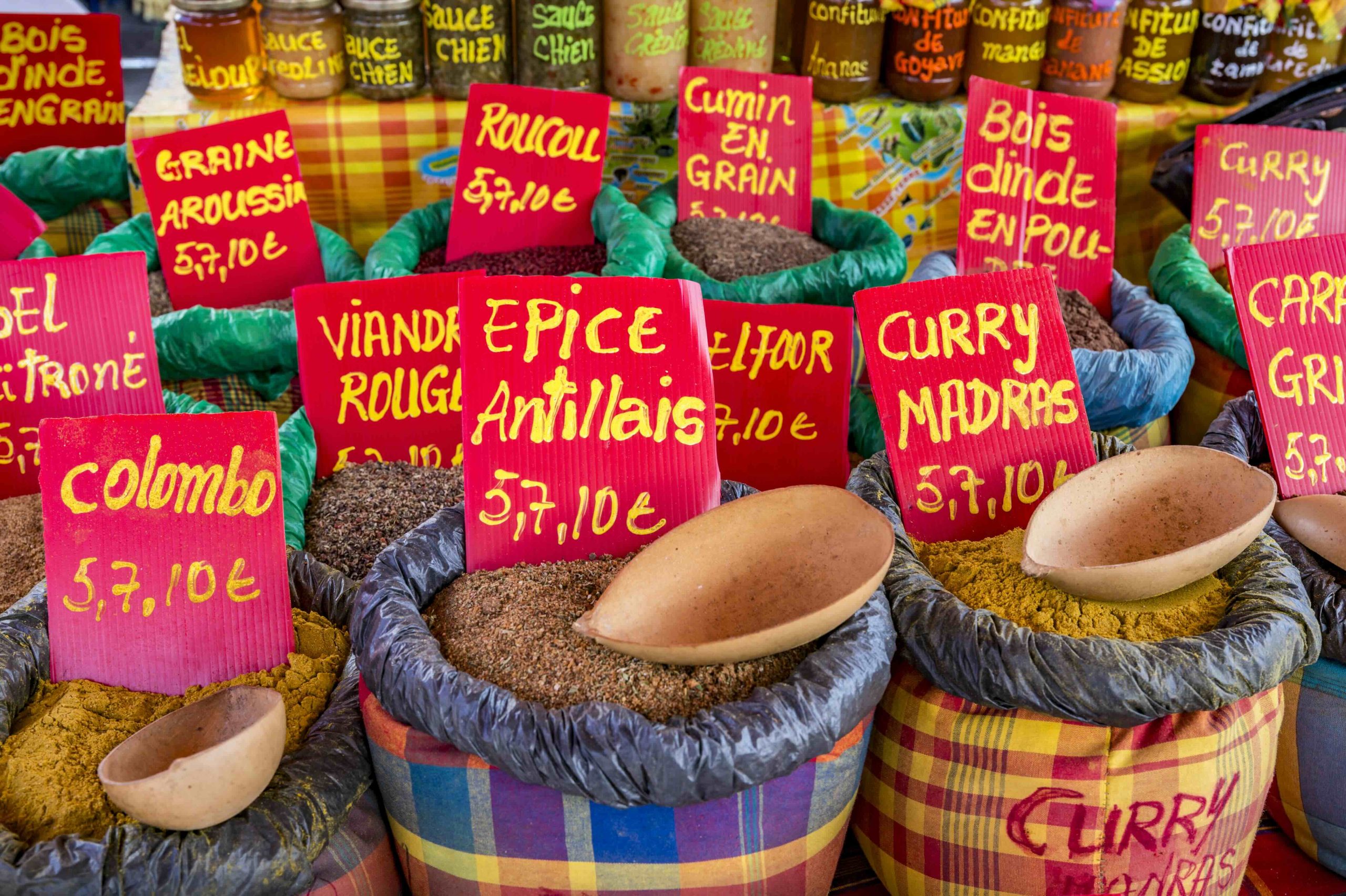
A colourful array of traditional spices, a staple of Guadeloupe’s open-air markets. Photo: Aurélien BRUSINI
Crossing over to the other wing
I have my first notion just how different Grande-Terre is from Basse-Terre when we drive past a billboard for Champagne. While the west wing of the butterfly is a natural playground, the east side is the beach retreat. This half of Guadeloupe is a shade more social, with more shopping and nightlife. My expectations are solidified when we arrive at the villas of Les Voiles Bleues, a sprawling indoor-outdoor accommodation filled with natural-toned, beach-chic furnishings. A private chef is quietly preparing what turns out to be a fabulous fish dinner.
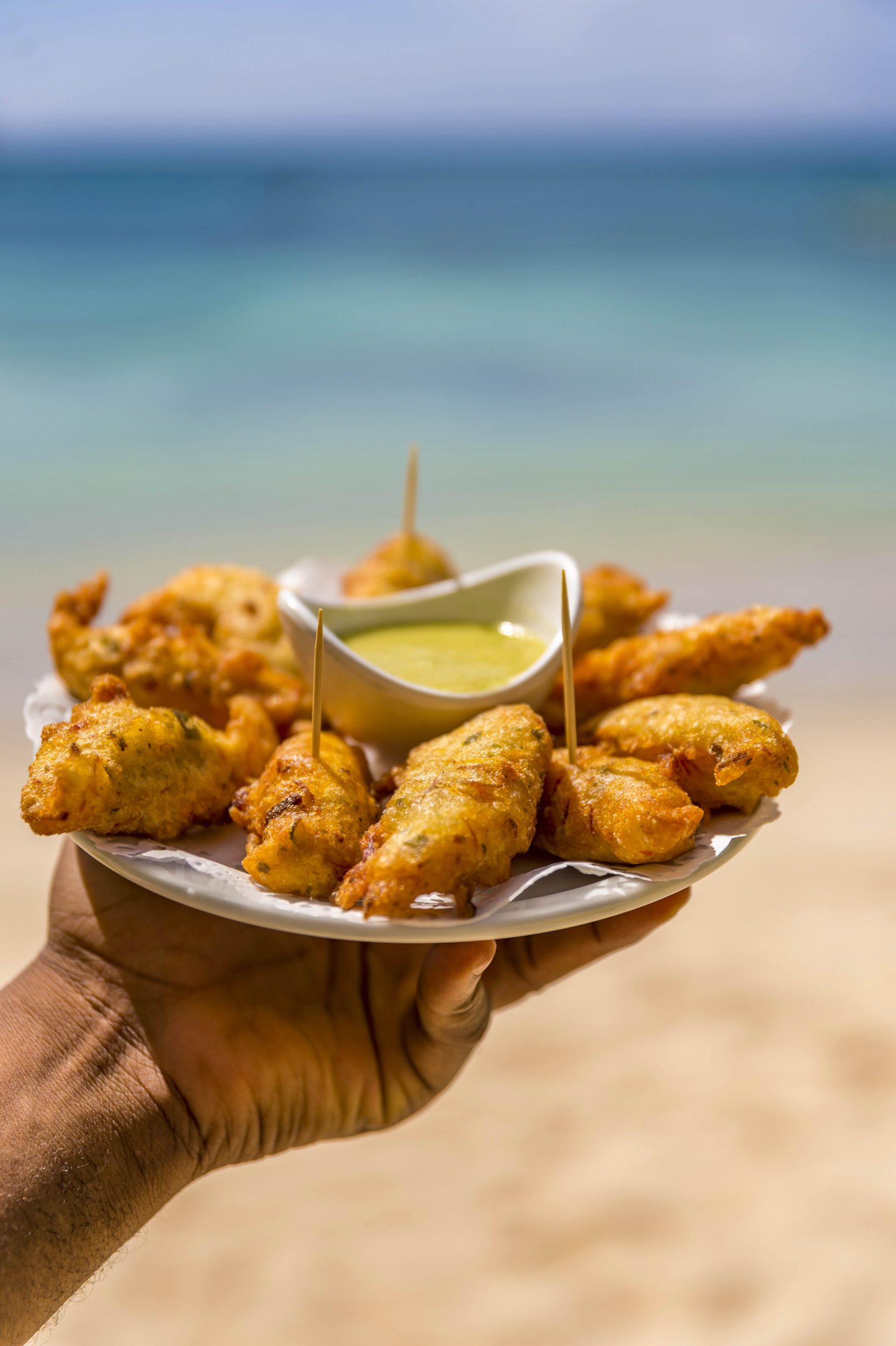
Guadeloupean cuisine in general is extremely healthy, an interesting mix of African, European and Asian flavours and influences.
Guadeloupean cuisine in general is extremely healthy, an interesting mix of African, European and Asian flavours and influences. In addition to excellent grilled fish, fish pâtés and traditional black pudding, staples include sweet potatoes, cabbage, okra and carrots. Breadfruit French fries fill at least one-half of my lunch plate one day at Jangal Kafé on Basse-Terre, gone in a flash, along with succulent chicken stew. At cosmopolitan Le 619 wine bar in Sainte-François, restaurateur Eric Pereiro serves up full French flare via a lengthy menu that includes tuna tartar, rich meat dishes, enormous charcuterie boards and thick slices of foie gras. And at La Toubana Hôtel & Spa – the only five-star resort in the French Caribbean – I sink into my poolside dining-room chair and tuck into exquisite ceviche and seared tuna.

The Memorial ACTe museum chronicles the Caribbean slave trade and the experiences of the region’s Indigenous communities.
A Guadeloupe adventure wouldn’t be complete without a little cultural tourism to give me a tale or two to take home. Visitors can find ample heritage heft in the city of Pointe-à-Pitre. The massive Memorial ACTe museum lays bare the timeline of the Caribbean slave trade and the events that shaped the lives of the Indigenous people. We back this up with a discovery of Pointe-à-Pitre by tuk-tuk, hearing stories about the monuments and street murals, and stopping to listen to street musicians play traditional Gwoka music. Learning about a destination’s past always makes understanding its present far more illuminating.
Refreshed with knowledge, invigorated by adventure, fueled by great food and kissed by the Caribbean sun, I’m thinking that Guadeloupe strikes precisely the right balance.
When You Go
Flight Information from Canada
- Air Canada: Weekly nonstop flights from Toronto (Saturday service until April 2026). Service from Montreal operates four to six times weekly, year‑round.
- Air Transat: New route from Quebec City debuting in February. Its Montreal service will become a year‑round offering next summer.
- Flight Time: Approximately five hours from major Canadian cities.