



It’s not yet noon, and I’m already up to my neck. Donning a brown yukata and emerging from the change room, I behold quite a sight – a team of hardworking guys working the steaming soil with their spades. One by one, they dig them: people-sized plots, maybe a foot deep. Rejecting every human impulse, I step into the closest one, and lay down.
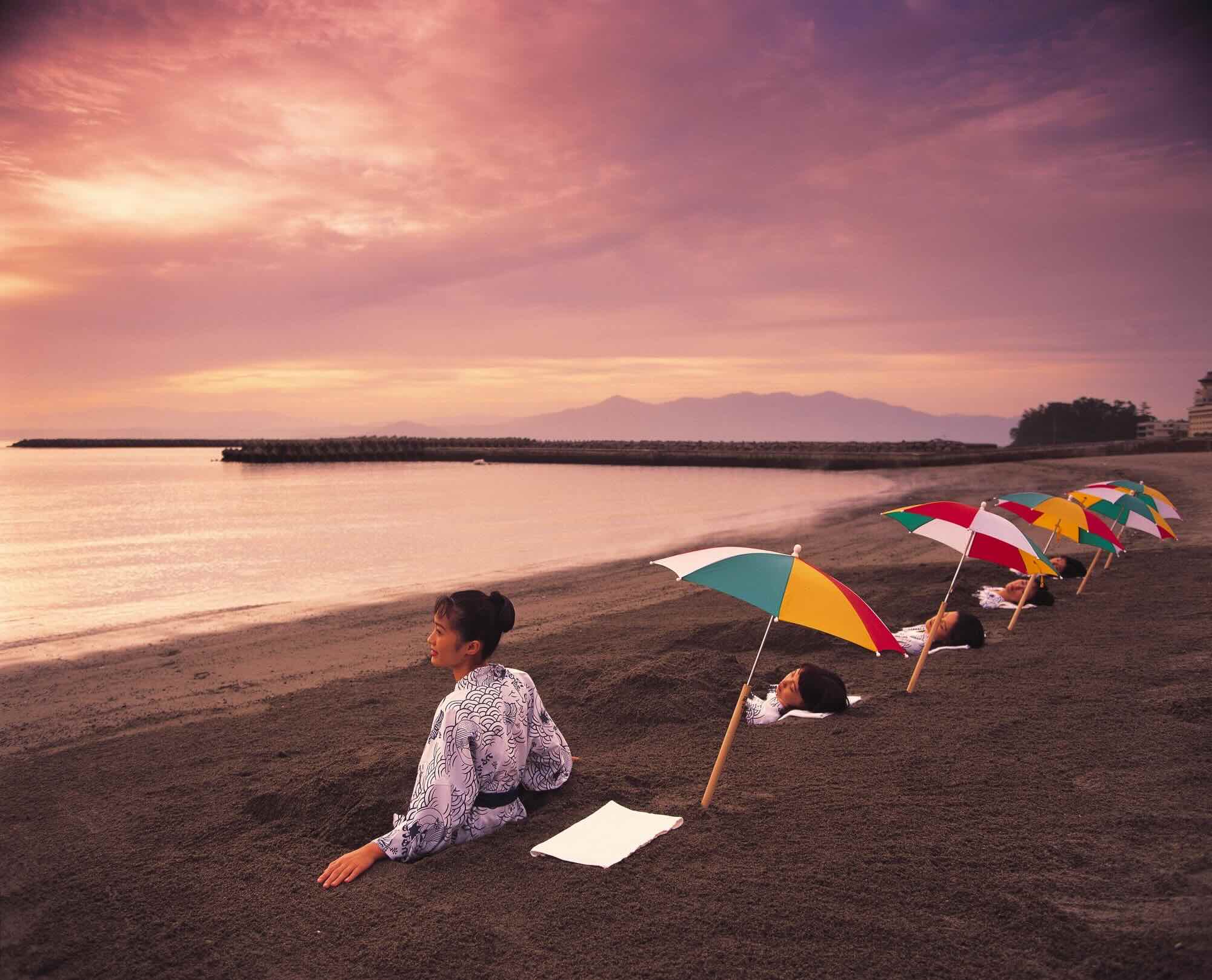
Locals and visitors relax in Ibusuki’s natural volcanic sand baths in southern Kyushu, Japan. Photograph provided by Kagoshima Prefecture Visitors Bureau
And then the diggers bury me completely, leaving only my face exposed. While it might sound a little claustrophobic, this “sand bath” is surprisingly pleasurable. Warm, but not hot, it’s like being wrapped up in a big, loamy comforter.





It’s an essential experience, and one of the many wonders you can take part in on the super-volcanic southern Japanese island of Kyushu. I’m sailing here aboard the Diamond Princess, a truly unique cruise ship that brings the Japanese experience on board, with an onsen spa, specialty sushi and even a Japanese cruise director (in addition to the English-speaking one). On my voyage, about half of the guests were Japanese, so just walking the decks provided a cultural experience.
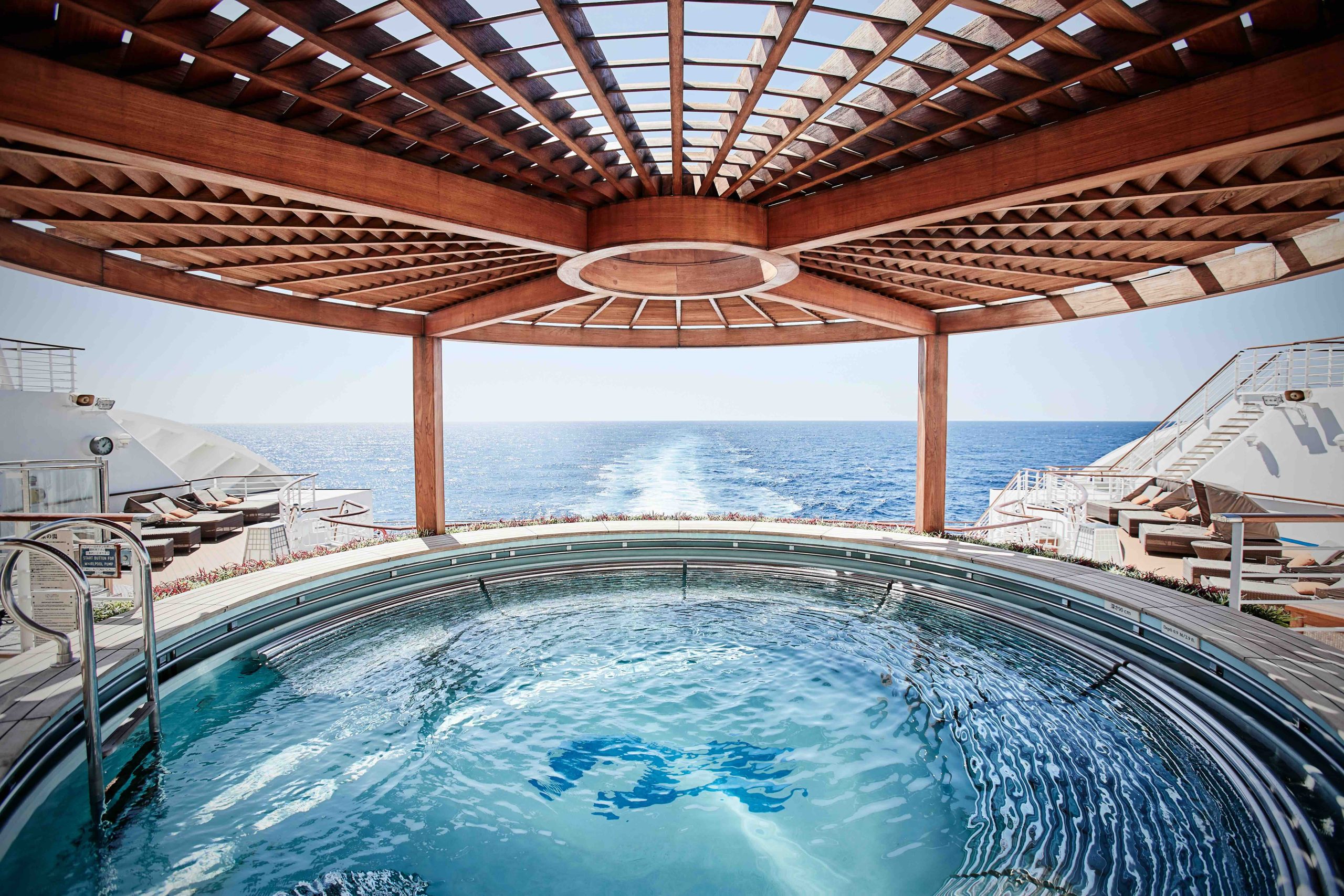
One of Diamond Princess’ most unique features is its Japanese onsen, Izumi. The luxurious bathhouse has two near-identical sides, with lockers, wash stations, a sauna or steam room, and large baths overlooking the ocean. Photo: Princess Cruises
And it’s a wonderful way to hop from port to port in the volcanic, mineral-rich fantasyland of Kyushu. Where, as my guide Mayumi Uchiyama explains just beforehand as we roll away from the ship on a coach in the mid-sized city of Kagoshima, a sand bath is a very healthy experience. The benefits are similar to sitting in a sauna. “It’s all about the sweat,” she says. The warm embrace of the soil boosts blood circulation and relaxes muscles. “It’s very efficient for medical ailments, and to gain energy.”
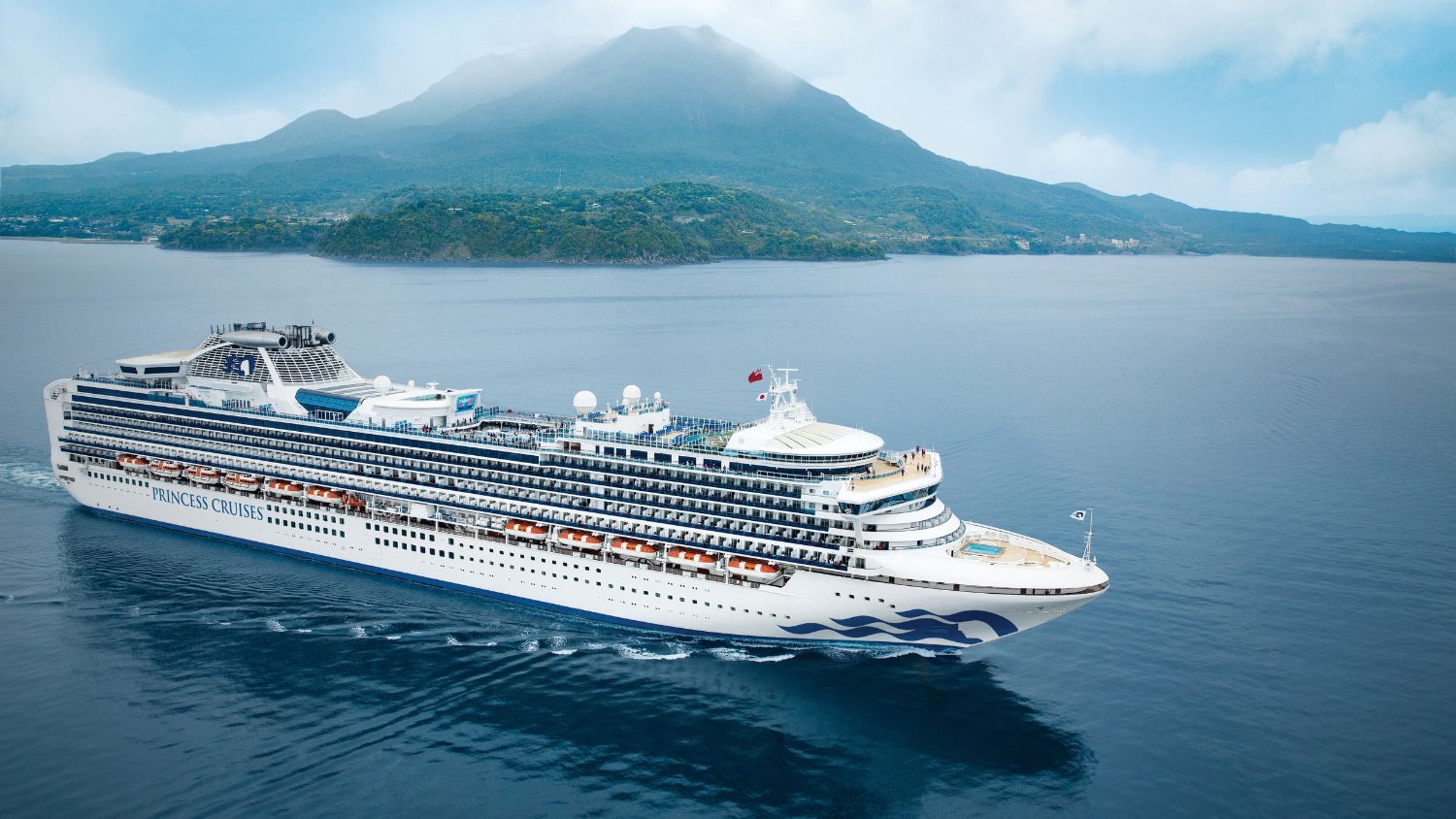
Diamond Princess sails past Sakurajima, the iconic volcano of Kagoshima, Japan. Photo: Princess Crusies
Kagoshima is a dramatic place, dominated by Sakurajima, one of 11 active volcanoes on Kyushu. Grey puffs rise from the summit as we head south. “It will erupt several times a day, and rises more than a thousand metres,” she says. “In the morning, you check the ash report and decide, laundry inside, or out?”
The coach curves along the coastline to Ibusuki, a small town in southern Kyushu known for its natural volcanic sand baths, a unique wellness experience that draws visitors from across Japan and beyond. Uchiyama notes the importance of ritual “onsen” bathing in Japanese culture. It’s not unusual for people to gather daily in the natural springs, the pools believed to promote healing, the social bonding an added benefit.
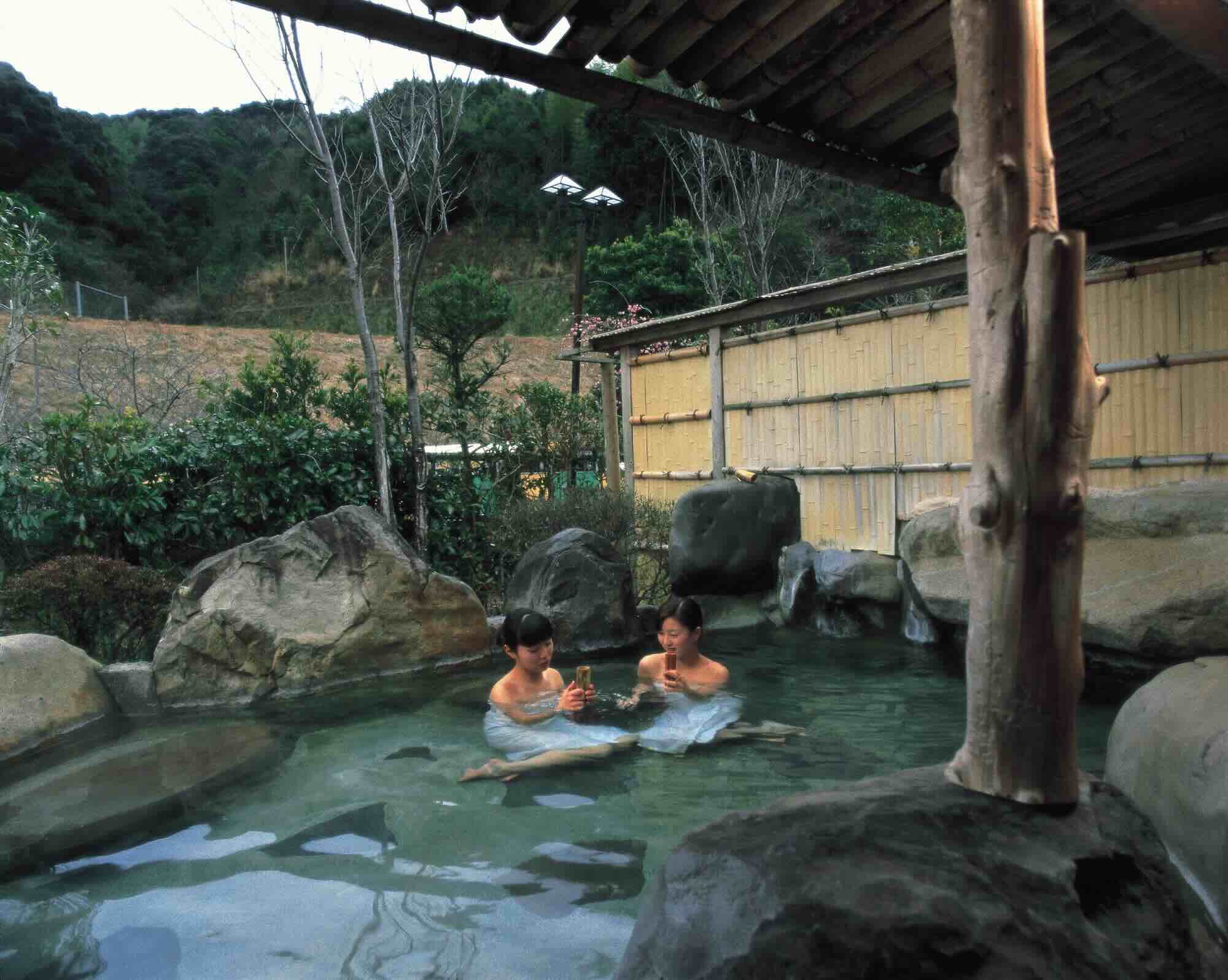
Onsen’ bathing is a cherished part of Japanese culture, with locals often gathering daily in the natural springs for their healing waters and social connection. Photograph provided by Kagoshima Prefecture Visitors Bureau
An onsen awaits after the sand bath, and Uchiyama notes that precise rules govern the process of preparing for, and entering, the bath. The most important one? “When you leave the locker room, you must be wearing only your birthday suit.” When we arrive at the onsen, I overcome my Canadian awkwardness, and strip right down.
Back on board the Diamond Princess, the sail-away is spectacular, the volcano on Kagoshima Bay still puffing away. And over the course of the voyage, cruising the bays and inlets around the island, the mountainous terrain of Kyushu puts on a show. Each morning brings a new adventure and some of the best in ports I knew literally nothing about, before the ship pulled up to the dock.
One of the best is a small place called Miyazaki. Again on a coach and rolling along a curving road that traces the contours of the coast, we pass a number of beaches, and there’s a few surfers out there on the water, even on a Tuesday morning. The palm trees sway in a slight breeze. Miyazaki is considered a home of the gods, with ancient legends told through Kagura dance. Dense forests, dramatic gorges and hidden mountain villages take you back to those storied times.
Approaching through rice paddies, the tour stops at a shochu distillery. People have made this clear spirit, which is created primarily from steamed rice, in the area for centuries. “You can taste as much as you like,” the guide, Miho Yamashita, jokes. “But after the tour, we still need to walk a lot!”
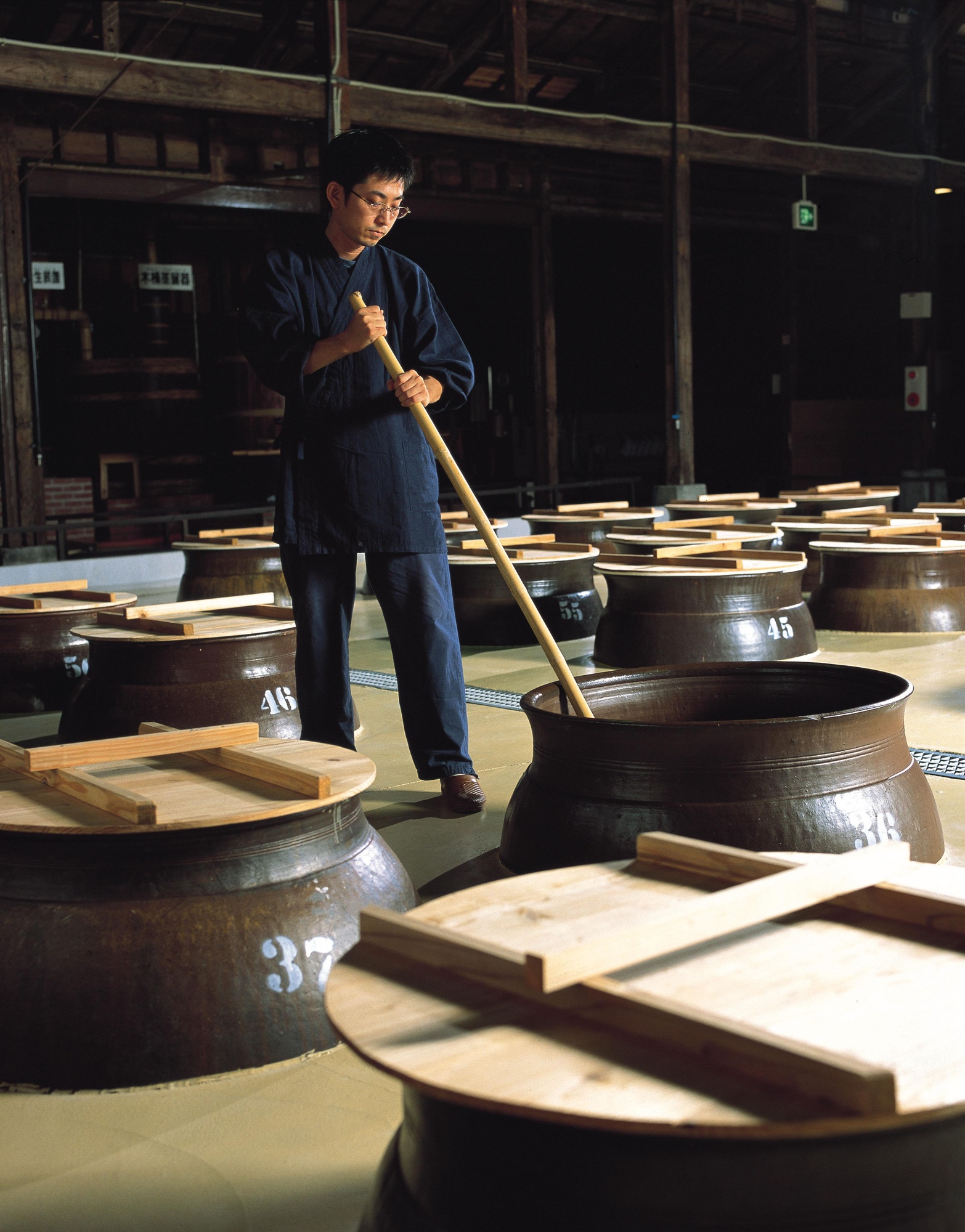
Centuries of tradition go into making shochu from steamed rice at this Kyushu distillery. Photograph provided by Kagoshima Prefecture Visitors Bureau
And on this point, she’s definitely not joking. The tour finishes in a beautiful and sacred place called Aoshima, where we take one of the loveliest walks you can imagine. Along a beach and through a subtropical botanical garden, and across a bridge to a tiny, 11-acre island.
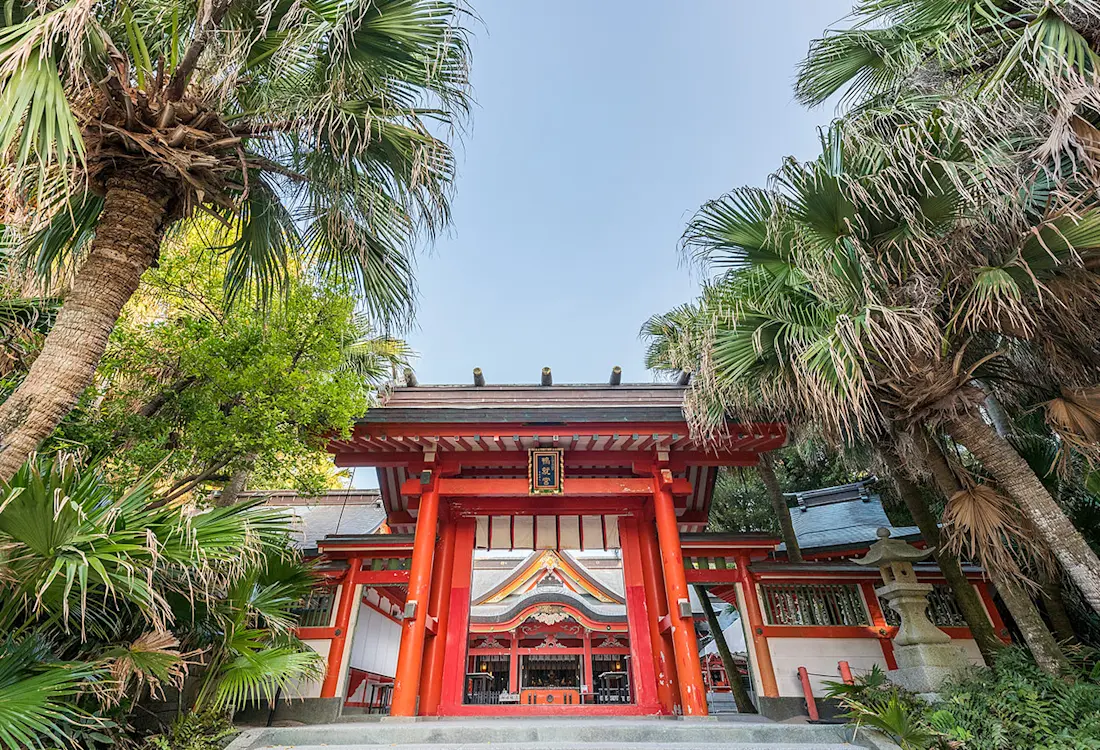
Aoshima Shrine is a serene Shinto shrine surrounded by lush subtropical greenery and framed by the dramatic natural rock formations known as the “Devil’s Washboard.” This unique combination of nature and culture makes it a must-visit spot in Miyazaki Prefecture. Photo: Visit Kyushu
It’s home to a Shinto shrine. Yamashita notes that while the shrine itself dates to the 9th century, this has been a sacred site for 2000 years. And for most of that time, only priests were permitted.
We pass under the Torii Gate, transitioning from the outside world, to the sacred. After purifying, we conduct a small, simple ritual. Tossing a clay disk against an area of rocks and trees, Yamashita explains that if it breaks, you’ll be protected from evil spirits.
Mine shatters. “Now, you’re protected,” Yamashita says. I don’t know much about Shintoism. But I most certainly feel very fortunate to be standing right here, right now, along the coast of Kyushu. www.princess.com/cruise-destinations/japan-cruises