



I AM WALKING ALONG a narrow sidewalk, stone walls on one side, cars whipping past on the other, when suddenly a minivan comes to a screeching halt. The door slides open and out pours a group of young women, each more colourful than the last, dressed in the regalia of their local village. Reds, oranges, yellows and bright pinks are only matched by their flashing smiles. The air is instantly filled with the sound of their laughter and the perfume from the herbaceous posies that each clutches in their hands.
You see, it’s parade day in Cusco, celebrating military history and the younger cadets. But almost every day is parade day in this Peruvian city famed for its altitude (it’s about 3400 m above sea level, if you’re wondering) and the gateway to Peru’s Sacred Valley. School’s out? Let’s have a parade! Want to dress your dog up in your local costume, there’s a parade for that, too. All Saints day? Definitely a parade.
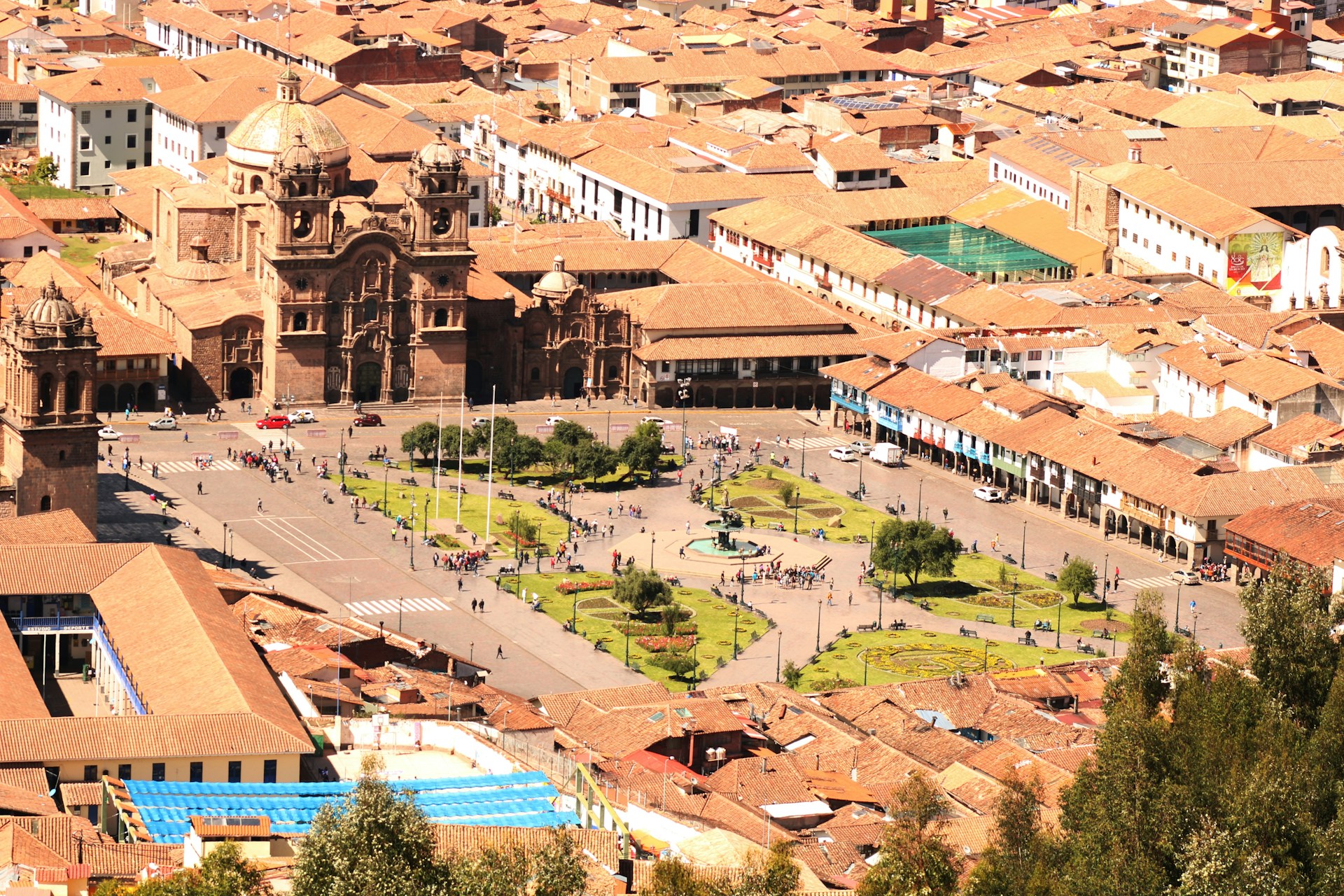
The Plaza de Armas in Cusco, where the grandeur of the Spanish colonial cathedral meets the enduring spirit of the ancient Inca capital. Photo by Renny Gamarra





There’s always a reason to dance and sing and to show off and share. Vendors are taking advantage of the crowds: popcorn, Jell-O pops, candies and all sorts of drinks and Peruvian delights imaginable are swinging from baskets and bags, adding to the colourful scene.
But I digress. I’ve come to Peru for a completely different reason. I’m taking Intrepid Travel’s Premium Walking and Hiking in Peru, to see one of the new seven wonders of the world, Machu Picchu. It’s a small group tour, with a focus on Cusco, the Inca Trail and the mystical lost – and then found – city itself.
The flight is overnight, arriving at Lima, the capital, just as the sun is rising. The traffic is already humming, and on the drive along the city’s Pacific coastline, a few surfers are spotted taking the early morning waves. With more than 10 million people, Lima is full of energy, yet the proximity to this massive body of water also gives it a chill, west-coastal vibe. Sandwiched between the Pacific Ocean and the Andean mountains, it feels breezy like Vancouver, but with the hazy fog atmosphere of San Francisco.
Food is inseparable from Peru’s sense of place, shaped by geography, migration and a deep respect for what the land and sea provide.
This coastal energy extends seamlessly to the country’s tables. Peru belongs on every slow foodie traveller’s list. Its capital, Lima, is a global culinary beacon, home to two of the world’s top 10 restaurants: Maido (number one) and Kjolle (number nine) on The World’s 50 Best list. More than a century of Chinese and Japanese immigration has left a lasting imprint, most notably through Nikkei cuisine, where Japanese techniques meet Peruvian ingredients.
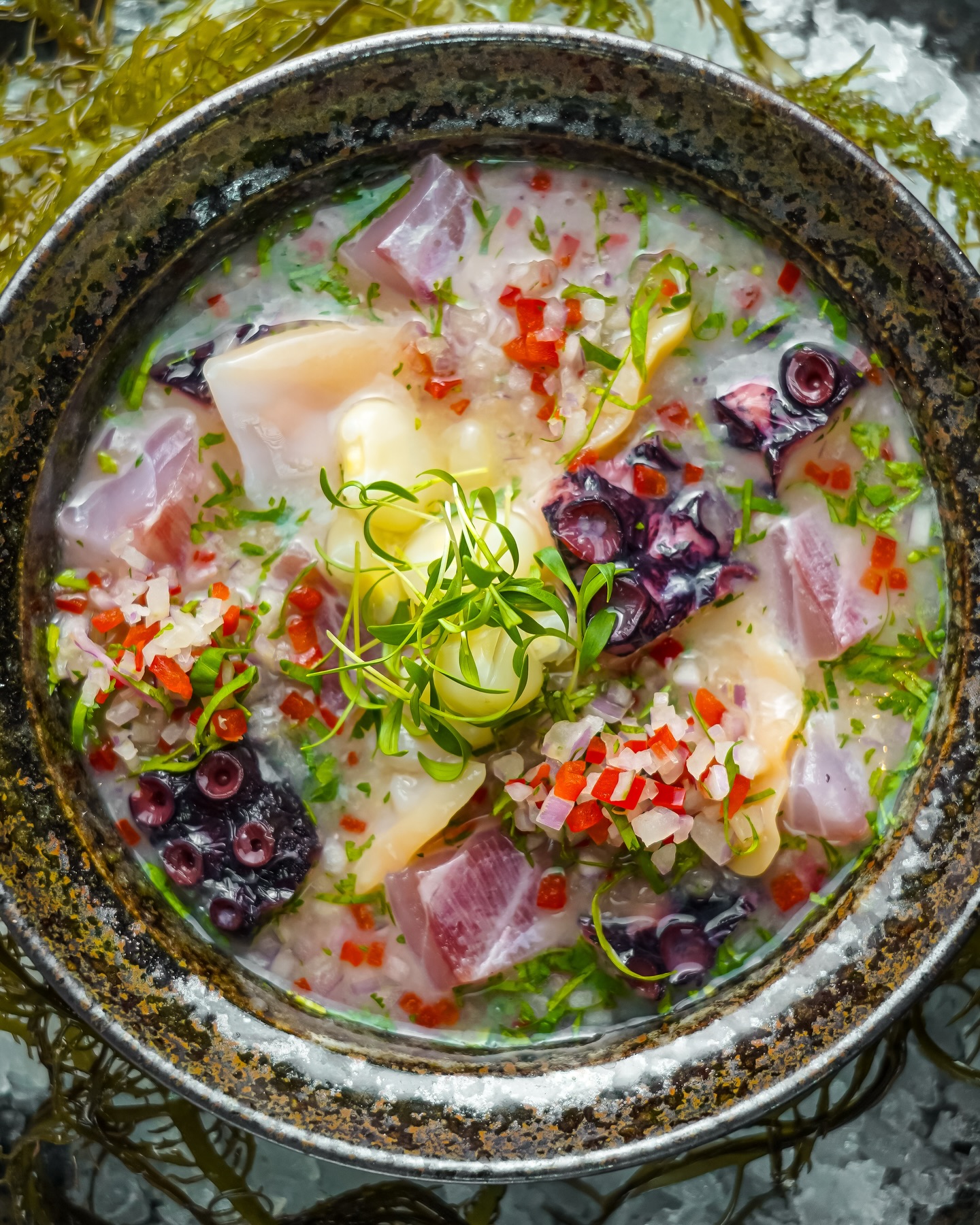
Named The World’s Best Restaurant in 2025 by The World’s 50 Best Restaurants, Lima’s Maido defines Nikkei cuisine, marrying Japanese precision with Peruvian ingredients, from Pacific seafood to Andean tubers and Amazonian flavours. Photo: Maido Restaurant
And beyond fine dining, Peru grows nearly everything it serves. Across the country, chefs turn fresh fish into citrusy ceviche, plate stir-fries of lomo saltado, and prepare causa, the beloved layered potato dish. It is food that nourishes both body and journey, fortifying travellers for experiences such as the hike along the Inca Trail.
At the village of Huilloc, I meet this Indigenous community’s gifted women weavers. I am mesmerized by those iconic Peruvian textiles – a kaleidoscope of colours woven into meaningful patterns that are so often associated with the country. The women are dressed from head to toe (hats included), the vibrant fabrics wrapped and shaped into jackets, skirts and ponchos in their traditional dress. They want to know everything about us, and speak to us through our guide Ale’s interpretations.

Village weavers in Huilloc, Peru. The women, dressed head-to-toe in their vibrant traditional dress, create the iconic textiles the country is famous for. Photo: Intrepid
During a bracelet-weaving lesson, it starts to rain, and one of the women notices I’m shivering. She steps away for a moment and then brandishes a hand-woven shawl and wraps it around me, along with the matching skirt. Cultural appropriation? I think not; is it any different than offering a shawl or blanket to a guest that’s feeling the chill? It’s her way of making her guest feel comfortable. I feel privileged that she would share her incredible works of handmade art so personally.
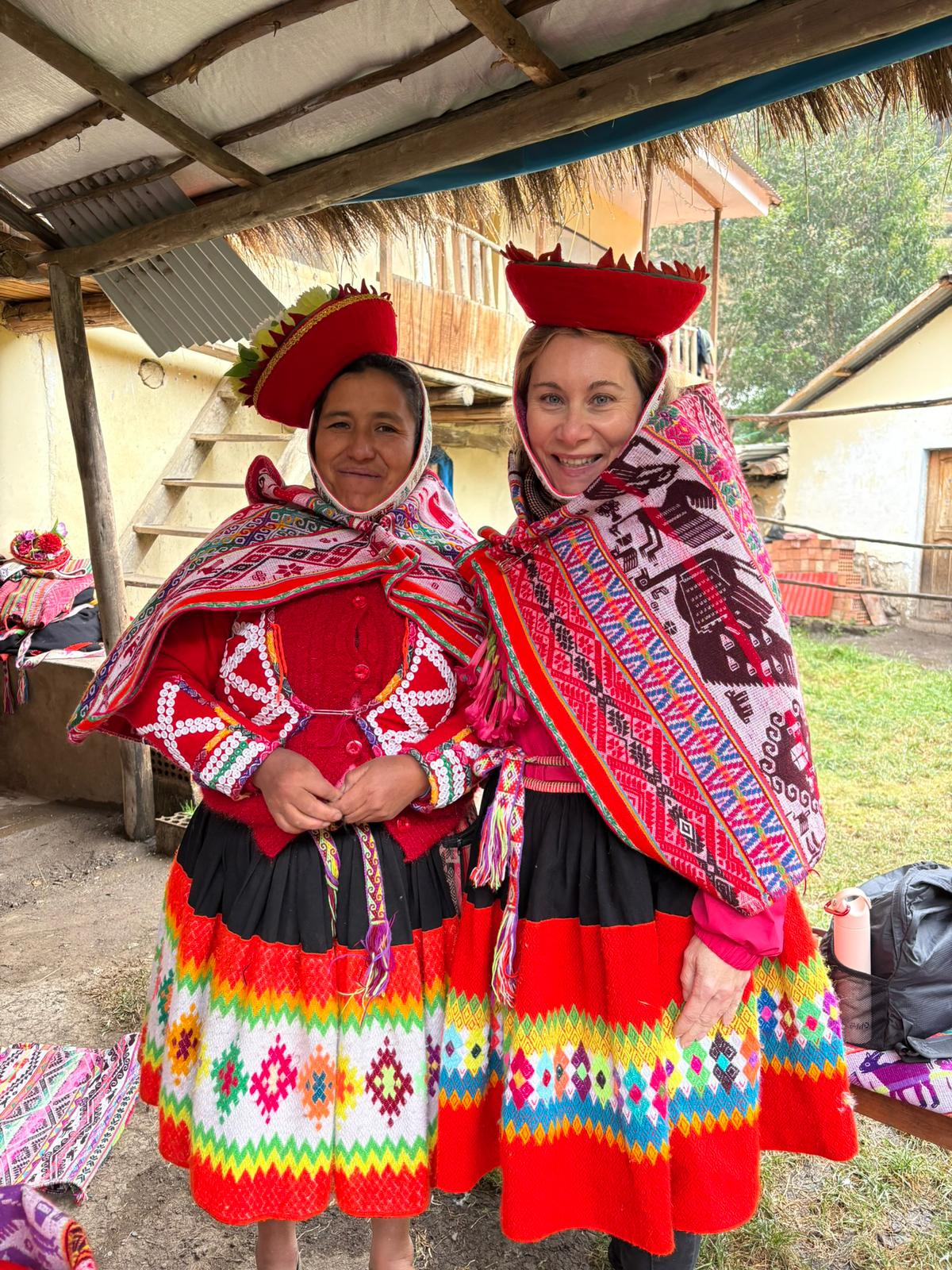
A living kaleidoscope of Peru. Bold Traveller’s Editor-in-Chief meets the gifted women weavers of Huilloc, guardians of the iconic textiles that tell this country’s story.
My personal mission is to make sure I can sustain myself on the day-long hike on the Inca Trail to Machu Picchu. We board a charming, old-school train for a scenic ride from Ollantaytambo to our starting check point along the trail. The tracks follow the banks of the Urubamba River, through green-on-green fields and river views.There’s a live band on board, and we’re also treated to a reenactment of the tragic story of star-crossed lovers connected to the lore of the region.
“Just breathe.” Our guide Ale is repeating this like a mantra, reminding us as we climb to keep our lungs full of energy-giving oxygen. Walking poles are extremely helpful on this mostly uphill trek; my legs and my lungs still feel the burn. Although I wouldn’t say it’s necessary to “train” for the hike, I would recommend being confident in your fitness abilities – and taking altitude sickness precautions before you embark on the journey.
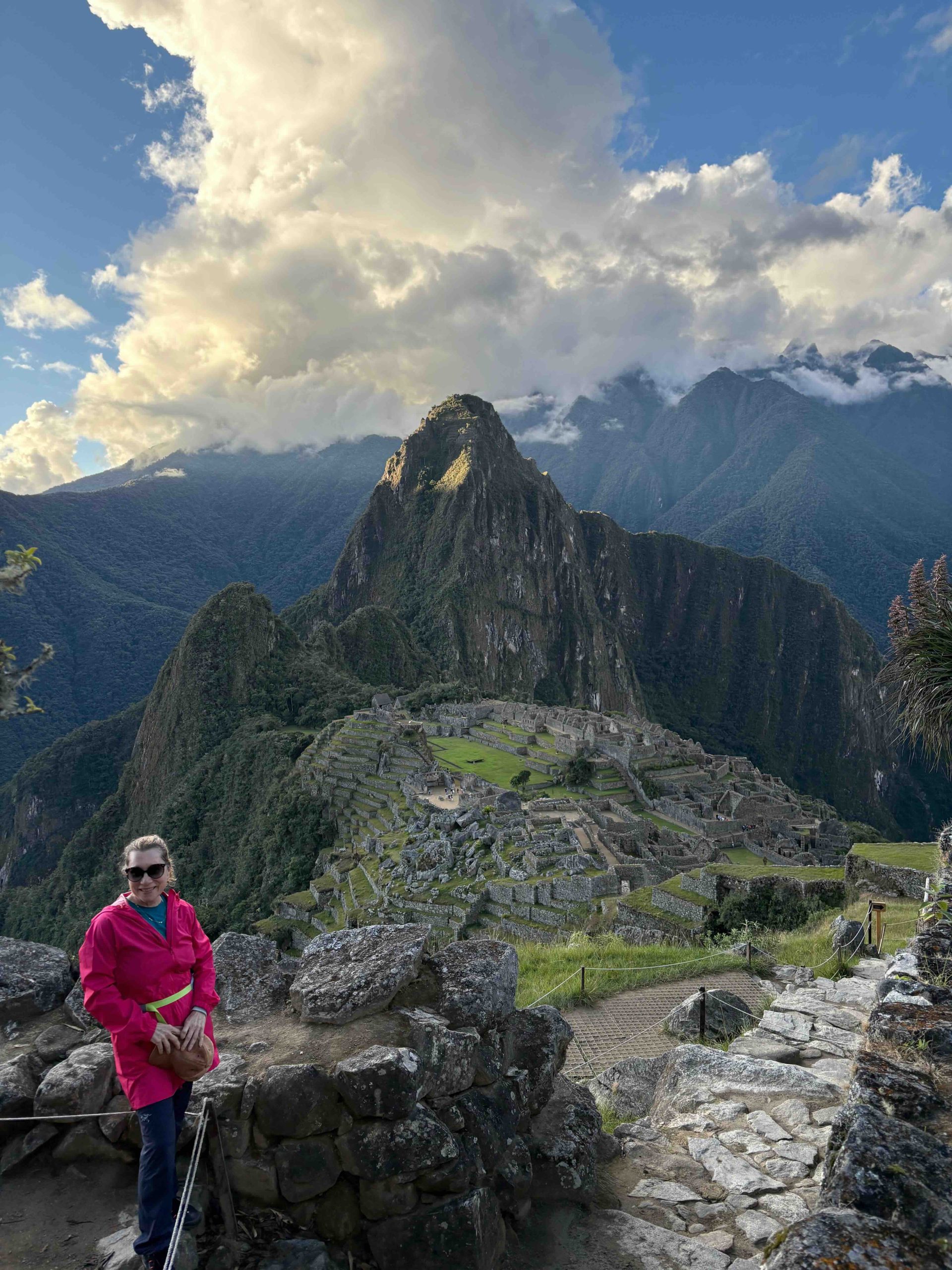
A journey of 23,000 steps culminates here. Vivian Vassos arrives at the Sun Gate as the sun sets over the sprawling wonder of Machu Picchu below.
After more than seven hours, 15 kilometres and 23,000 steps, my goal has been met: I arrive at the top, the trail’s end, catch my breath and stride through the circle of the Sun Gate. The sun is slowly setting, and the wonder of Machu Picchu is sprawling just below.
WHEN YOU GO
Air Transat flies nonstop from Toronto to Lima, and you can also fly Air Transat from Montreal, with two direct flights per week from both cities. We recommend booking Transat’s Club Class for priority check-in and boarding, and for the extra-roomy seats — the most spacious in this premium class — all of which are either an aisle or a window. Meals are well prepared, and the comfort kit is handy, with all the usual suspects — toothbrush, socks, hand cream and more — plus you get to keep the blanket.